

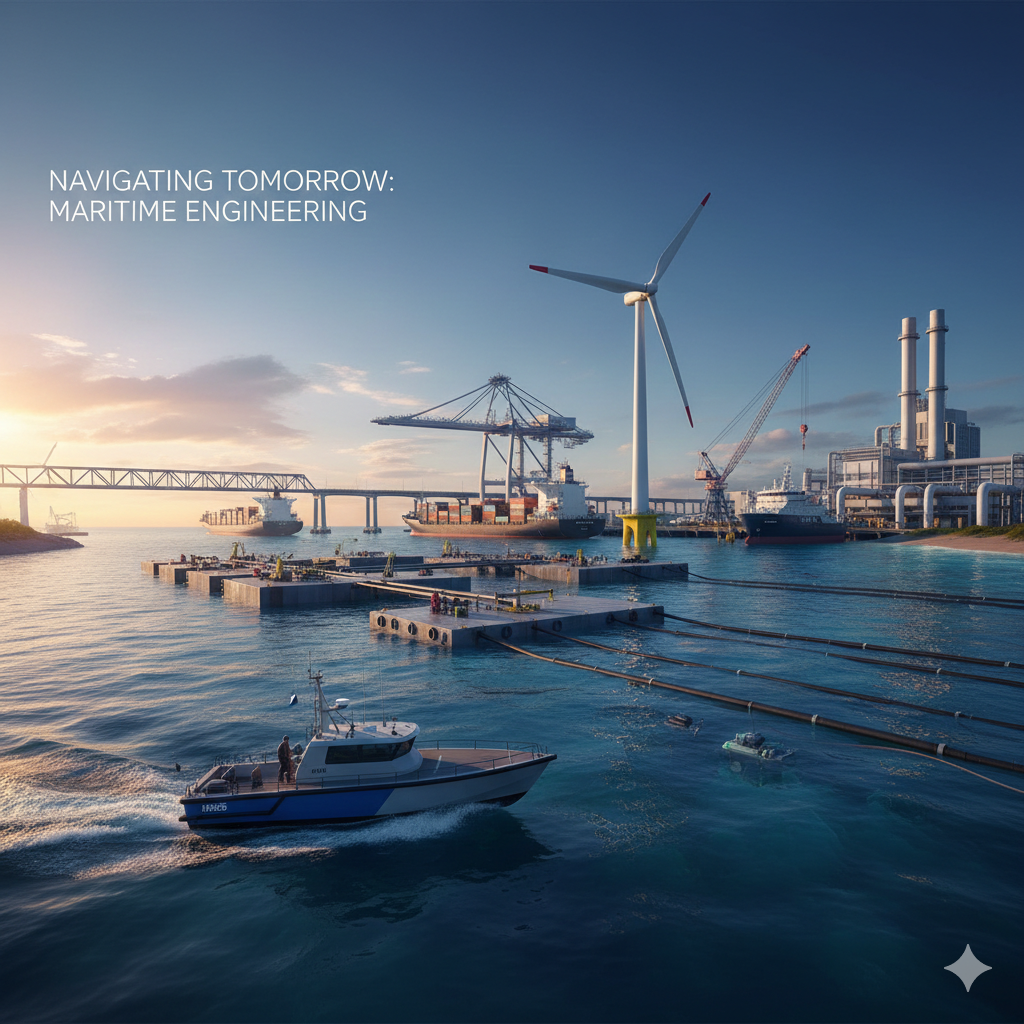
From ancient Phoenician traders to today’s supertankers, the sea has always been humanity’s greatest highway. But behind every ship, every port, and every offshore structure lies the silent, intricate work of Maritime Engineering. At MBES, we understand that this isn’t just a specialized field; it’s the very backbone of global commerce, defense, and increasingly, sustainable energy.
What Exactly is Maritime Engineering?
At its core, maritime engineering is the application of engineering principles to the marine environment. It’s a vast discipline encompassing:
- Naval Architecture: The design and construction of ships, submarines, and other floating vessels. Think hull forms, stability, propulsion systems, and internal layouts.
- Ocean Engineering: Designing and building structures that operate in or under the ocean, like offshore oil rigs, wind turbine foundations, subsea pipelines, and even artificial reefs.
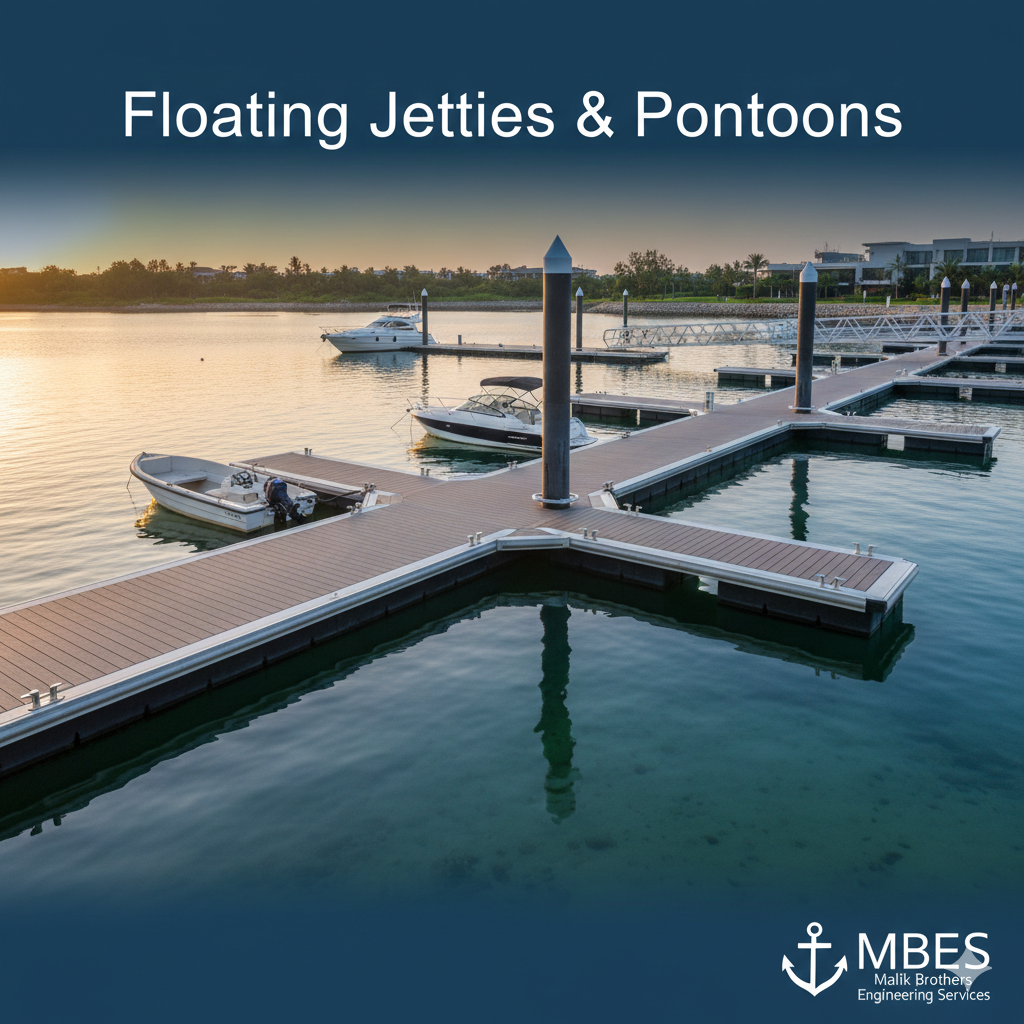
- Coastal & Port Engineering: The development and maintenance of harbors, jetties, breakwaters, and other infrastructure that allows vessels to safely interact with land.
- Marine Systems Engineering: Focusing on the complex mechanical, electrical, and electronic systems within a vessel or offshore structure – engines, navigation, communication, and automation.
Why Maritime Engineering Remains Critical for Pakistan (and the World)
- Economic Lifeline: Over 90% of global trade is transported by sea. For a country like Pakistan with a strategic coastline, efficient ports and reliable shipping are non-negotiable for economic prosperity and international trade.
- National Security: A strong maritime engineering sector is vital for maintaining a robust naval defense, protecting sovereign waters, and safeguarding critical sea lanes.
- Energy & Resources: From offshore oil and gas platforms to the burgeoning potential of marine renewable energy (wave, tidal, offshore wind), engineers are at the forefront of harnessing ocean resources.
- Environmental Stewardship: Modern maritime engineering increasingly focuses on sustainable practices – designing greener ships, mitigating pollution, and developing infrastructure that coexists with marine ecosystems.
MBES: Pioneering Innovation in Pakistan’s Maritime Sector
At MBES, we’re not just observers of maritime progress; we’re active contributors. Our work exemplifies the cutting edge of modern maritime engineering:
- HDPE Vessels: We’re leading the charge in High-Density Polyethylene (HDPE) workboats and patrol crafts. These vessels offer unparalleled durability, corrosion resistance, and are virtually unsinkable – a significant leap from traditional materials in challenging marine environments.



Leave a Reply